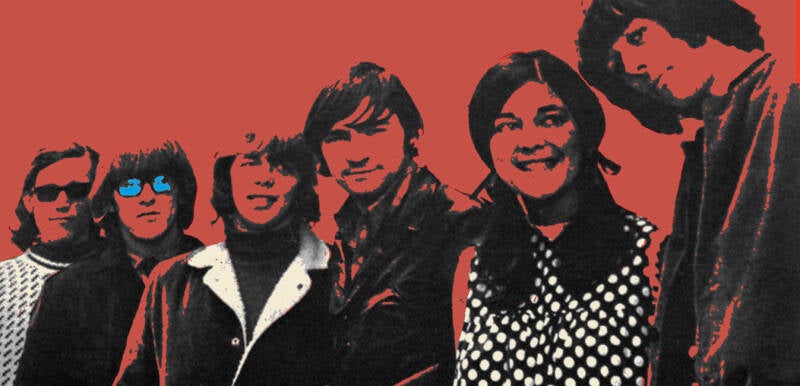
PAUL KANTNER
(1941-2016)
Today we celebrate the birthday of Paul Kantner, the soul of Jefferson Airplane.
Further on in this blog, his biography.
The digital artwork of Jefferson Airplane and the 366 portraits of world-famous musicians calendar
are made by me, Frieke.
Click on March to to view the calendar.

Paul Kantner: The Life and Music of a Rock Visionary
Paul Lorin Kantner, born on March 17, 1941, in San Francisco, California, was one of the most influential and visionary musicians within the psychedelic rock scene that American music history has produced. As a co-founder, guitarist, and songwriter of Jefferson Airplane — and later Jefferson Starship — he left an indelible mark on psychedelic rock, the counterculture of the 1960s, and the broader rock canon of the twentieth century. His musical career spanned more than five decades and was defined by artistic courage, political engagement, and a boundless love for folk, rock, and science fiction.
Early Life and Musical Formation
A San Francisco Childhood
Kantner grew up in a Roman Catholic household in San Francisco. After a difficult early life — his mother died while he was still young — he found solace in music. In the late 1950s, he became captivated by the folk revival sweeping the United States. Artists such as Pete Seeger, The Kingston Trio, and Bob Dylan formed his early musical frame of reference.
The Bay Area Coffeehouse Scene
After a brief stint at Santa Clara University, Kantner’s real education came from the vibrant coffeehouse scene of the Bay Area. In clubs like The Fox & Hound in San Jose and the coffeehouses of Berkeley, he honed his acoustic guitar skills and developed the distinctive open tuning and rhythmic playing style that would later become hallmarks of the Jefferson Airplane sound.
Jefferson Airplane: The Birth of the San Francisco Sound
Formation and Early Success
In 1965, Kantner co-founded Jefferson Airplane alongside Marty Balin — a band that would quickly become the defining voice of the psychedelic rock scene in San Francisco. Their early sound fused folk, blues, and electric rock, colored by the powerful vocals of Signe Toly Anderson and, from 1966 onward, Grace Slick. The debut album Jefferson Airplane Takes Off (1966) showcased the band’s folk roots, but it was Surrealistic Pillow (1967) that propelled them to international fame. Featuring tracks such as Somebody to Love and White Rabbit, the album became a major commercial success, reaching the top of the charts (no. 3 in the US). Kantner contributed compositions including the dreamy My Best Friend. Surrealistic Pillow remains to this day one of the most influential albums in the psychedelic rock tradition, regularly appearing on greatest albums of all time lists worldwide.
“Music was never a career for us — it was a way of living, a way of thinking about the world.”
Political Vision and Artistic Growth
Following Surrealistic Pillow, Kantner’s ambitions as a songwriter grew rapidly. Albums such as After Bathing at Baxter’s (1967), Crown of Creation (1968), and Volunteers (1969) featured an ever-increasing share of his compositions. Volunteers was especially emblematic of his activist spirit: its overt anti-war messages and revolutionary lyrics made it one of the most radical rock albums of the Vietnam era. The title track Volunteers resonated as a rallying cry for an entire generation.
Woodstock and the Height of the Counterculture
In the summer of 1969, Jefferson Airplane performed at the legendary Woodstock festival. Their early morning set — delivered after a night of delays — was wild and electric, a perfect mirror of the era’s spirit. Kantner’s rhythmic guitar work, combined with Slick’s vocal power and the virtuosic playing of Jorma Kaukonen and Jack Casady, made Jefferson Airplane one of the enduring highlights of Woodstock.
This period marks the cultural zenith of Kantner’s influence. His home on Fulton Street in San Francisco — a stone’s throw from the famed Haight-Ashbury district — served as a gathering point for artists, activists, and musicians. Kantner was not merely a musician but a symbol of the hippie movement, the peace movement, and the sexual revolution.
Blows Against the Empire: Kantner as Solo Artist
In 1970, Kantner released the remarkable Blows Against the Empire uit, credited to Paul Kantner/Jefferson Starship. This concept album — steeped in science fiction imagery and utopian dreams — depicts a group of people who hijack a starship to found a new civilization in the cosmos. It stands as one of the most ambitious and original works in American rock history.
Blows Against the Empire received a nomination for a Hugo Award (Best Dramatic Presentation) — a unique distinction for a musical album. It demonstrated the breadth of Kantner’s intellectual horizons: he used popular music as a vehicle for literary and philosophical exploration, well beyond the conventions of rock songwriting.
Jefferson Starship: From Psychedelia to the Pop Mainstream
In the early 1970s, the loose Jefferson Starship collaboration evolved into a fully-fledged band. Albums such as Dragonfly (1974) and Red Octopus (1975) — which sold over three million copies in the US — proved the band’s commercial viability in the post-hippie era. During the 1980s, however, Jefferson Starship adopted an increasingly pop-oriented direction. Kantner, ever faithful to the ideals of the counterculture, grew uncomfortable with this trajectory and departed in 1984 following a dispute over the band’s musical direction and the use of its name.
The KBC Band, Reunions, and a Return to Roots
After his departure, Kantner co-founded the KBC Band with Marty Balin and Jack Casady, releasing a self-titled album in 1986. In 1989, the original Jefferson Airplane lineup reunited for a comeback album and tour — a reunion for which Kantner was the driving force. During the 1990s, he reformed Jefferson Starship as an ongoing touring project under the name Jefferson Starship — The Next Generation, which continued to perform at festivals and concert venues with rotating lineups but always with Kantner as the anchor.
Personal Life
Kantner’s long-term relationship with Grace Slick produced their daughter China Wing Kantner in 1971. The relationship was turbulent yet musically extraordinarily fertile, yielding some of the most memorable moments in the Jefferson Airplane discography. He later married Cynthia Bowman, with whom he had two sons, Alexander and Gareth. He was known as an eccentric but devoted father who raised his children with a deep love for music, literature, and adventurous thinking.
Musical Legacy and Influence
Paul Kantner’s musical legacy is vast. As a songwriter he authored iconic compositions including Crown of Creation, Volunteers, Have You Seen the Stars Tonite, and Hijack. His guitar playing — rhythmic, open, and rich with twelve-string tones — defined the sound of Jefferson Airplane and influenced generations of rock guitarists. In 1996, Jefferson Airplane was inducted into the Rock and Roll Hall of Fame, a recognition long overdue and richly deserved.
“His music still sounds fresh, urgent, and liberating — proof that true art is timeless.”
Death and Enduring Legacy
On January 28, 2016, Paul Kantner passed away at the age of 74 in San Francisco following multiple organ failure caused by a heart attack. His death was mourned around the world. Musicians including Mick Jagger, David Crosby, and Roger McGuinn paid tribute to his profound impact. Kantner left behind not only an impressive discography but also a spirit — a way of thinking about music, art, and society that has permanently shaped his contemporaries and the generations that followed him.

Reactie plaatsen
Reacties